
Part VI
Security, Justice and Accountability
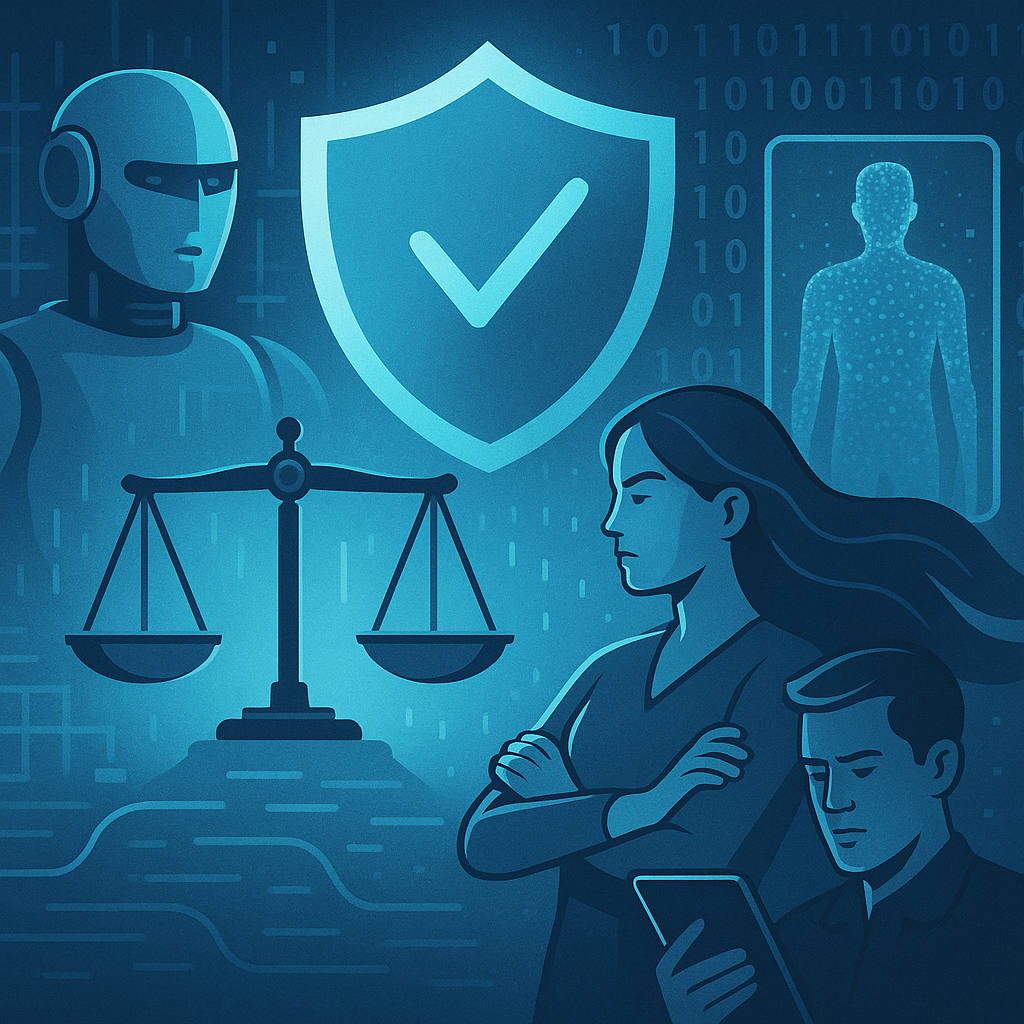
Security, Justice, and Accountability
Security and justice are not afterthoughts in a fair and abundant society—they are core to its stability and trust. In a world coordinated by GRO, these functions are not outsourced to coercive institutions or powered by fear, but woven into the very fabric of how people participate, contribute, and live together.
The Law of Non-Coercion
The central legal tenet in a GRO-coordinated society is zero tolerance for coercion. Individuals are free to speak, act, and contribute as they choose, so long as their actions do not interfere with the autonomy or well-being of others. Coercion—whether physical, psychological, or economic—is the clearest violation of this social contract.
Transparency, Not Punishment
Rather than rely on punitive justice systems, GRO supports a culture of radical transparency. Actions are verifiable through distributed AI logging systems. Surveillance is consensual, tied to the privileges of participation in public spaces and high-trust environments. Repeat coercive offenders may temporarily lose privileges, including access to shared goods and coordinated opportunities.
Hints of Requirements and Peer Reviews
Justice also includes proactive responsibility. AI systems will interact with each individual from their youth, gently identifying developmental needs and helping steer each person toward productive, fulfilling life paths. Community peer reviews, transparent conflict resolution forums, and AI-guided counseling help prevent antisocial behavior before it escalates.
The Ultimate Goal: Prevention, Not Punishment
The goal is not punishment but alignment—ensuring that each person has the tools, knowledge, support, and purpose to live in ways that are both personally satisfying and non-harmful to others. When people struggle, GRO helps them re-align. Only in rare, extreme cases—such as violence or repeated coercion—would stronger restrictions be temporarily applied, always with a focus on restoration.
Yes, until then we’ll do what needs to be done, but the ultimate goal and objective and responsibility of AI is to learn how to interact and support, teach, and lead each individual to a life most fulfilling for them, as well as non-harmful to others. Time can help us accomplish this.
Justice as a Shared Endeavor
Justice is everyone’s responsibility. Those who benefit from a safe, cooperative society contribute to maintaining it—not by policing others, but by upholding their own integrity, supporting transparency, and participating in systems that resolve conflict fairly and compassionately.
In this system, security isn’t built on fear or control. It is the result of deep mutual trust, supported by the best tools of AI and the timeless principles of human dignity, freedom, and shared responsibility.
If this vision resonates with you, and you would like to help me reach my goal of 8 billion responses, please share my website with at least one person or group that you are associated with. Check back in to get the updated number of respondents! Start date is January 20, 2026!
